 Chamber Culture
Chamber Culture
Chamber Culture
Most AI chamber management software is a text box bolted onto a platform built before any of this existed. Chamber Culture CRM was built the other way round: the AI reads the same live member record the rest of the platform runs on, so it drafts renewal email in your chamber's voice, answers reporting questions in plain English, proposes a save for a member the system has flagged as at risk, and answers visitor questions on your public directory.
AI-native chamber management software means the AI is wired into your member data, not parked next to it. The practical test is one question: ask the AI something only your own roster could answer. A retrofitted feature cannot answer it, and that is the whole difference.
What that gets a chamber, in three things:
Every association management platform now advertises AI. Almost all of it is the same generic writing assistant, attached to a product whose data model predates it by a decade.
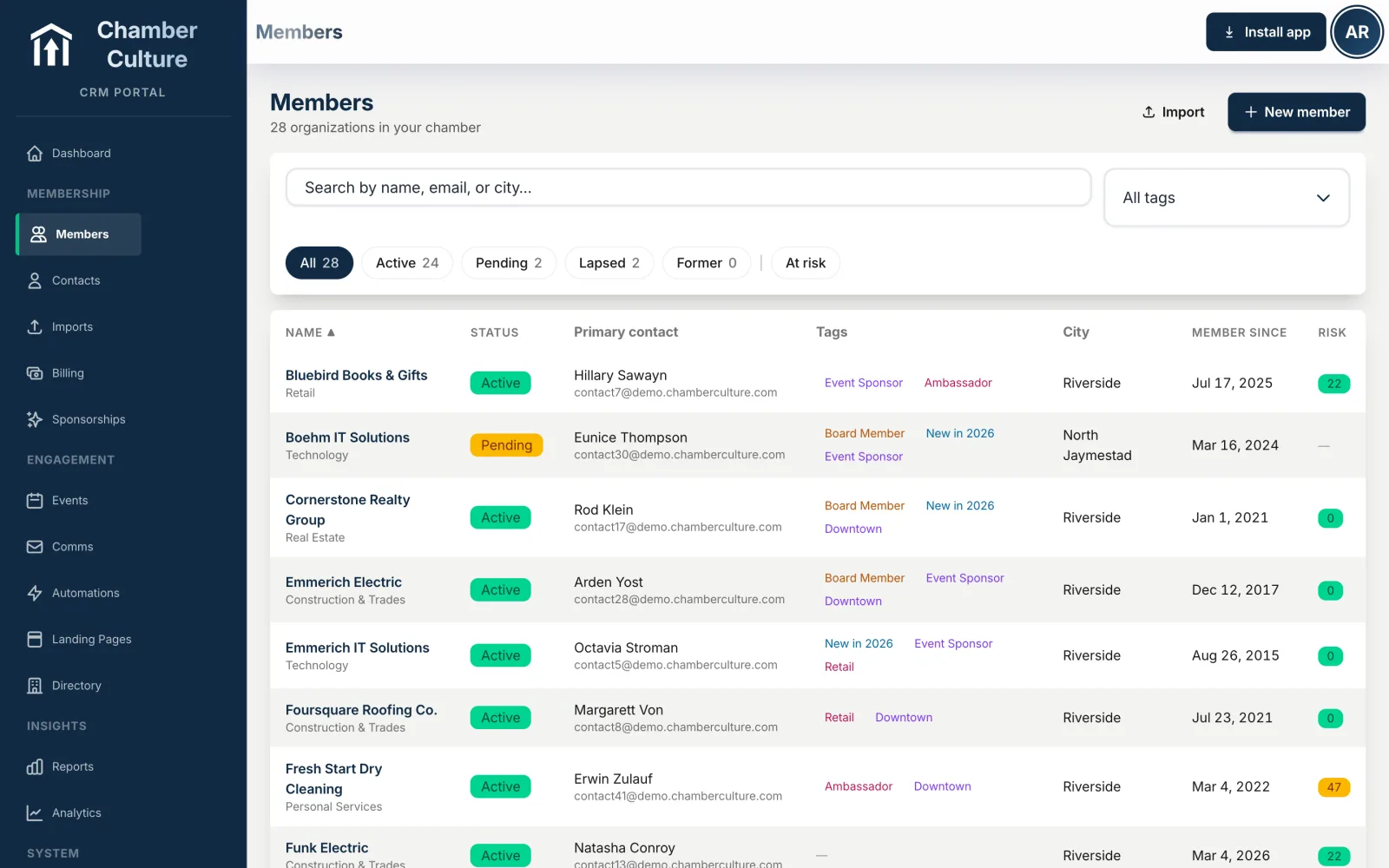
An AI feature added to a legacy AMS can write you a paragraph about a networking breakfast. It cannot tell you which twelve members have not attended one in eight months, because it was never given access to the attendance data, the dues history, or the engagement record. So the chamber executive still exports a spreadsheet, still reads it by hand, and the AI saved a few minutes of typing rather than any of the actual work.
AI-native means the opposite arrangement. In Chamber Culture CRM the AI calls the same member model, the same reporting catalog and the same event records the rest of the platform uses, under the same tenant boundary. A drafted renewal email already knows who is lapsing. A reporting answer comes from a real query the platform validated, not from a plausible-sounding number. That is what AI-native member management means in practice, and it is why the phrase is worth checking rather than accepting.
The same logic runs through the rest of the platform: see how the whole system fits together on the chamber management software page, or how it compares against the incumbents on GrowthZone and ChamberMaster.
Six capabilities that are live in the product today. Each one runs against your chamber's own data, and each one is scoped so a staffer stays in control of what goes out.
Give the composer an instruction and AI returns a full draft: subject, preheader, and real content blocks, written against a per-chamber voice profile you edit yourself (tone, phrases to use, phrases to avoid, sign-off). It also suggests which segment of the roster to send it to.
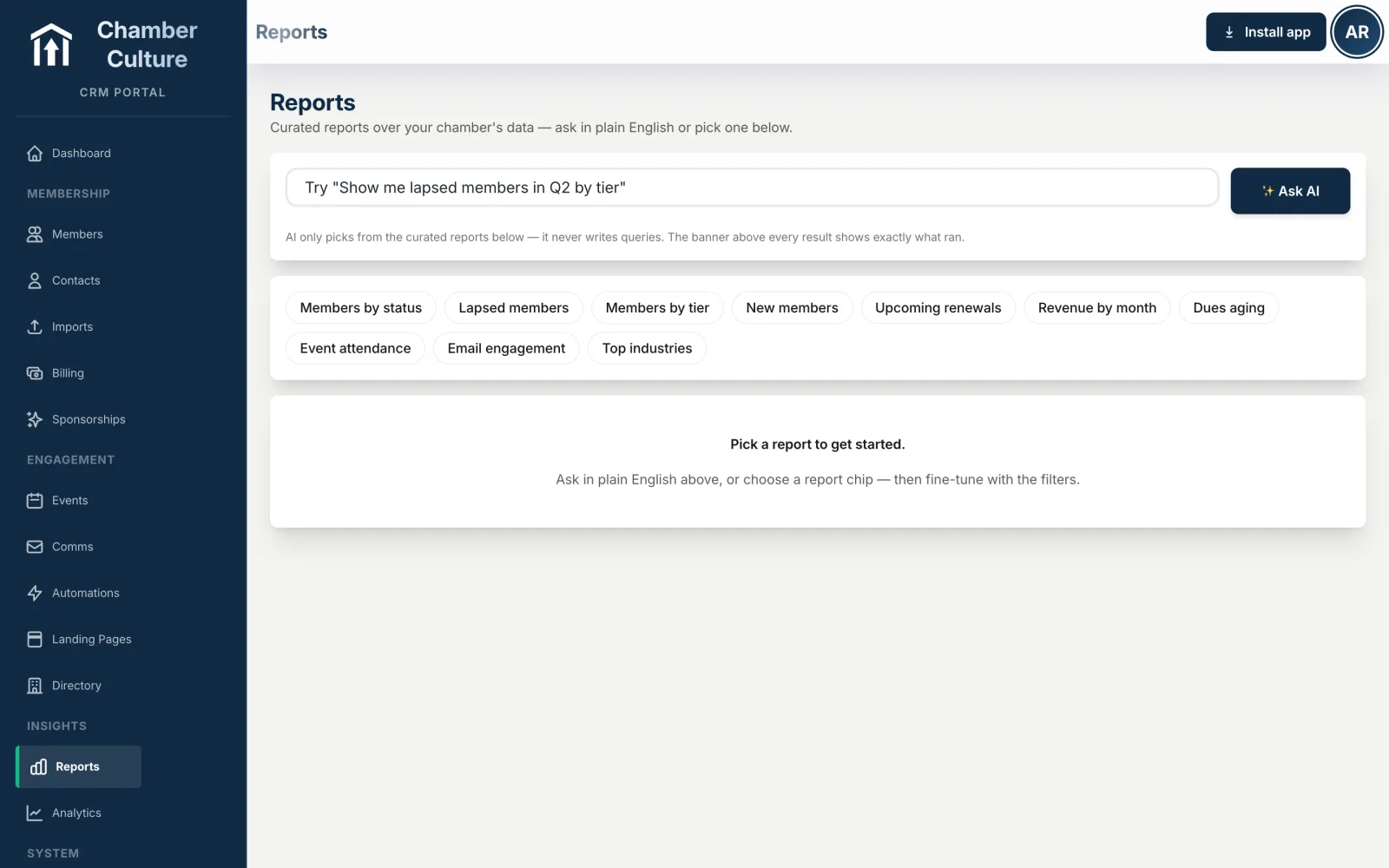
Ask "how many members lapsed last quarter" in words. The AI never writes a database query. It picks from an allow-listed report catalog, and the platform re-validates that pick before anything runs, so you get a real report rather than an invented figure.
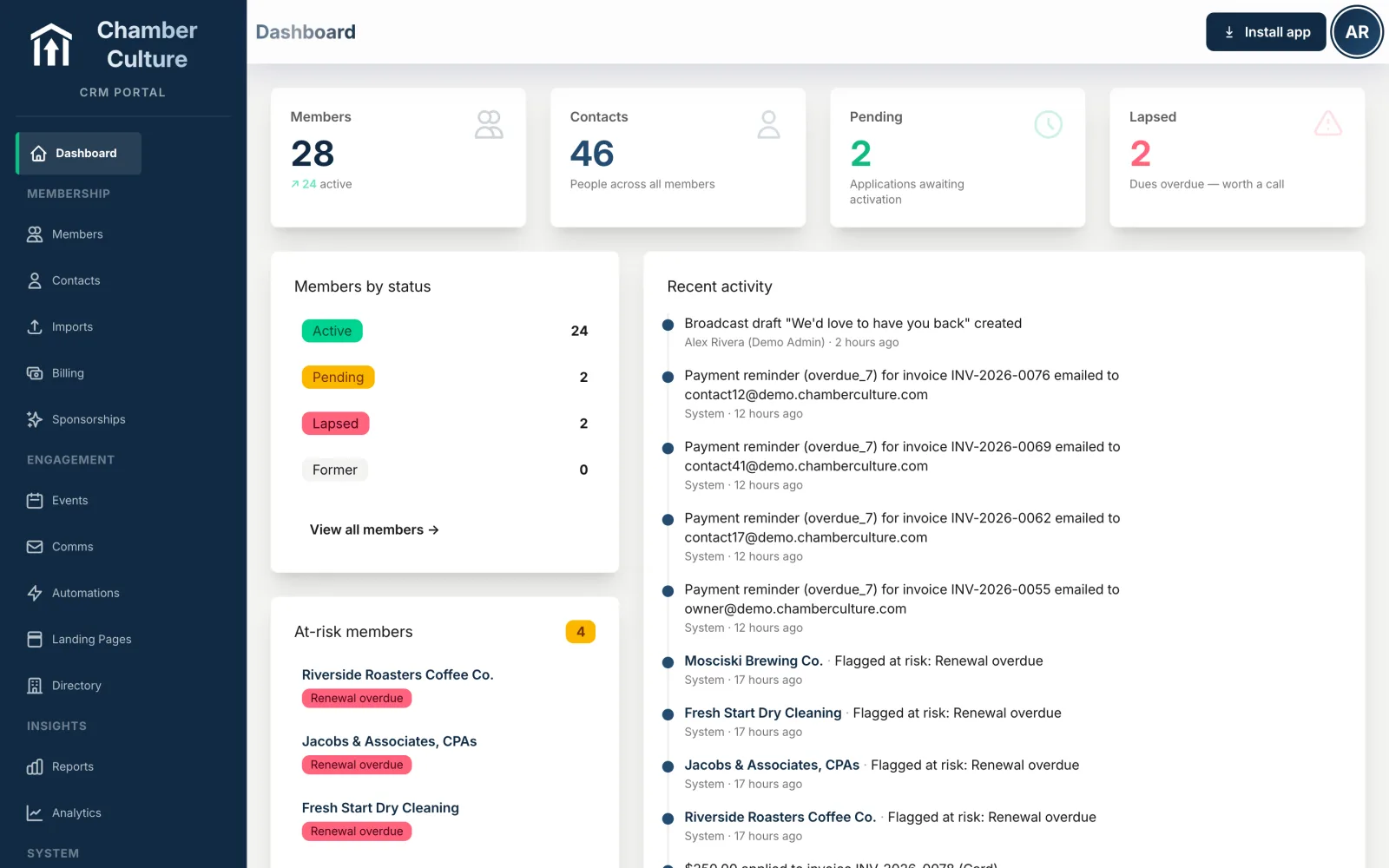
The risk flags themselves are rules-based and inspectable, no black box: engagement signals your staff can read and argue with. AI does the part rules are bad at, proposing a specific next step for that particular member. Deterministic where it should be, generative where it helps.
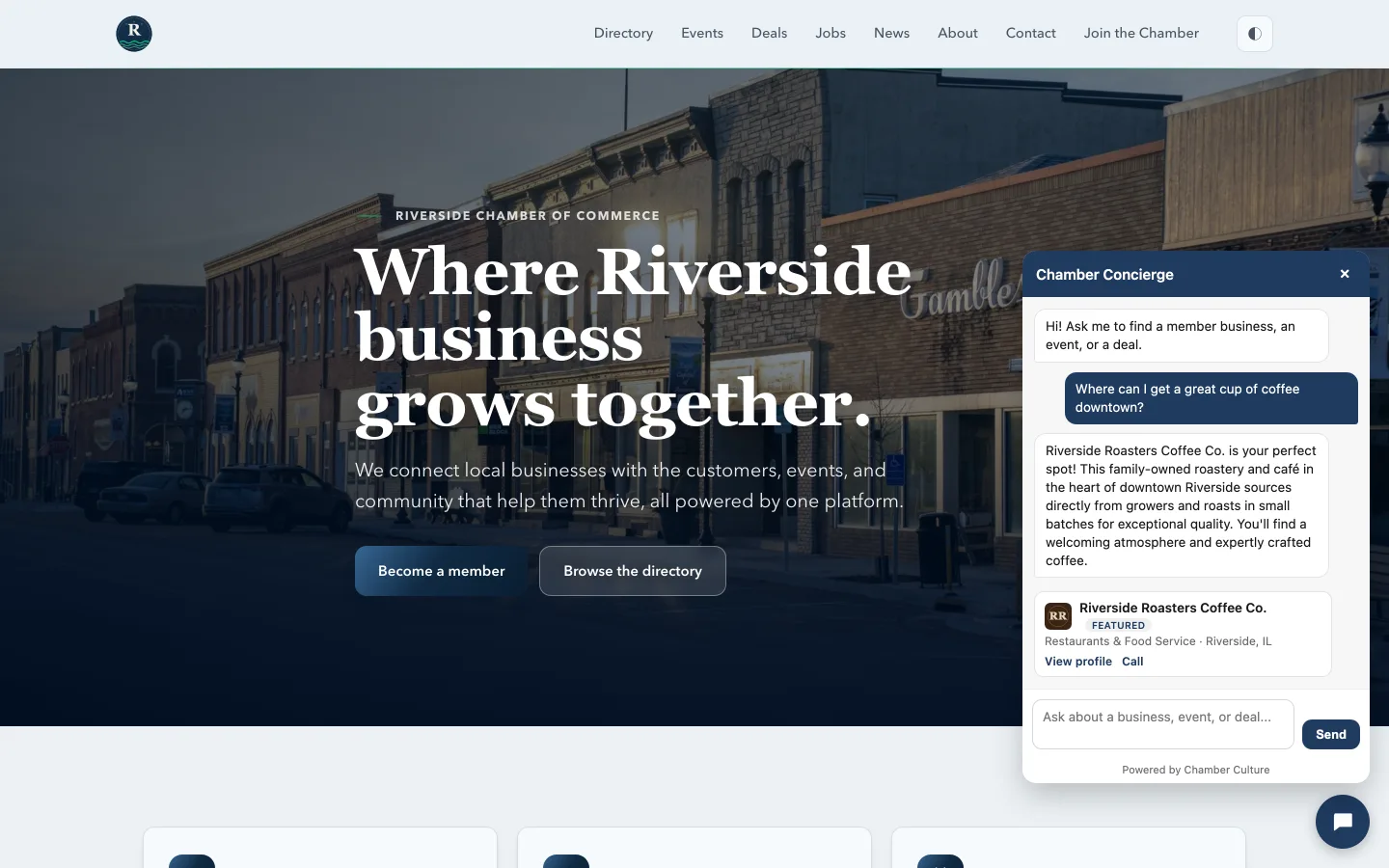
A concierge on your chamber website answers a visitor's question in plain language over your live directory, events and member deals, then hands them the right member business. Automating chamber member engagement on the public side, not just the admin side.
Bring a GrowthZone, ChamberMaster, Wild Apricot or spreadsheet export. AI maps the columns, a dry run shows exactly what will change before it changes, and one-click undo makes it safe to try. The riskiest hour of a migration, de-risked.
The help assistant answers "how do I…" out of the same documentation the guide renders, so the two can never disagree. It is deliberately walled off from member data entirely: it explains the software and points you at the right screen, and nothing else.
Every capability above is included on every published plan. See them in context on the features page →
A member relationship is not a place for a confident guess. The constraints below are design decisions, not limitations we are apologising for.
The AI never writes SQL. Reporting questions resolve to a pick from a fixed catalog of reports, and that pick is validated again by the report runner before a query executes. A language model cannot invent a number, and it cannot reach data it was not meant to see.
Risk flags are rules, not vibes. The scan that decides a member is at risk is deterministic and auditable. If a staffer disagrees with a flag, they can see exactly which signal produced it. AI only proposes the follow-up.
Nothing sends itself. AI drafts; a person reviews and sends. For renewal and retention email in particular, the chamber's relationship with its members is the product, and it is not delegated to an automation.
Your member data is not training data. AI features are scoped per chamber, and the assistants that do not need member access do not get it.
AI chamber management software is a chamber of commerce management system where the AI does operational work inside the platform rather than sitting beside it as a separate writing tool. In Chamber Culture CRM that means AI drafts member email in your chamber's own voice profile, turns a plain-English question into a real report, suggests a concrete save action for a member the system has flagged as at risk, maps your columns during a data import, and answers visitor questions on your public directory. Every one of those runs against your live member record, which is what separates AI-native member management from an AI writing box bolted onto a legacy AMS.
AI-added means a generic text generator was attached to an existing product, so it can write a paragraph but it cannot see your members, your dues history, or your event attendance. AI-native means the AI is wired to the same data model the rest of the platform uses, so a drafted renewal email already knows who is lapsing, and a report answer comes from the reporting catalog rather than from a guess. Practically, the test is simple: ask the AI something only your own data could answer. A retrofitted feature cannot answer it.
Yes, but the useful automation is narrower than the marketing usually suggests. Chamber Culture CRM scans your roster on rules you can inspect, flags members whose engagement signals point at a non-renewal, and then uses AI for the part rules are bad at: proposing a specific two or three sentence next step for that member. The flag is deterministic and auditable; the suggestion is the AI. Staff still decide and send, which is the correct division of labor for member relationships. There is a fuller treatment of the retention workflow in the chamber member retention guide.
No. Chamber member data is not used to train models. AI features are scoped per tenant, several of them are deliberately walled off from member data entirely (the in-app help assistant, for example, can only read the product's own help documentation and never the member database), and AI-generated reporting is constrained to an allow-listed report catalog rather than being allowed to write its own database queries.
Not at Chamber Culture. The AI capabilities are part of the platform on every published plan, starting at $150/mo for chambers under 500 members. Legacy AMS platforms typically quote-gate their pricing and commonly position AI as a paid add-on tier on top of a contract that already runs several thousand dollars a year. Compare the numbers on the ROI calculator.
Draft an email in your chamber's voice, ask a report a question in plain English, and watch the concierge answer over a live directory. No sales call to see it.
See the live demo →