 Chamber Culture
Chamber Culture
Chamber Culture
Most chambers track members in a spreadsheet bolted onto a legacy AMS, then guess who to call about the next membership tier. The method below works in any system: tag members the right way, watch four signals for upgrades and four for drops, then run a one-minute test on whatever software you use. At the end we show how Chamber Culture CRM automates all of it.
By Kevin Champlin, founder of Champlin Enterprises, builder of Chamber Culture CRM. · Reviewed: September 2026.
Most chamber CRMs let staff tag members freely, and most chambers end up with a junk drawer: one tag list mixing "manufacturing" with "attended gala" with "call before renewal." That works for a month, then nobody trusts it. There are really only three kinds of tags, and each one has a different job.
Industry, woman-owned, veteran-owned, downtown. These describe who a member is. They're nearly permanent, so set them once at join and forget them; they're for segmenting newsletters and reporting demographics to your board, not for tracking activity.
Attended 3+ events this quarter, sponsor, committee member. These describe what a member does, and they change constantly. This is the category chambers get wrong: staff try to maintain behavior tags by hand, and the tags fall out of date within a quarter. Behavior tags should be set by software, from event check-ins and payment records, not by memory.
Upgrade candidate, renewal risk. These exist for one reason: to trigger a phone call. A pipeline tag isn't a label, it's a to-do item wearing a label.
The failure mode is tag rot: a behavior or pipeline tag that a human was supposed to keep current by hand, and didn't. Six months later "engaged member" means nothing because it hasn't been touched since spring. The rule: automate behavior tags, or don't use them.
Renewal season shouldn't be the first time you think about who's ready for the next tier. Four signals, tracked continuously, tell you months in advance:
A member who hits three of the four is worth a coffee, not an email. That's a phone call or an in-person visit, not a mail-merge.
The same tracking that finds upgrade candidates finds members about to lapse, and the warning signs show up early enough to act on:
Catching any one of these early and making a check-in call is worth more than any upsell, and it costs far less than replacing the member.
Before you trust any software, including ours, with tracking this, run it through one test: load 50 real members and time yourself answering two questions.
If either question takes longer than a minute, you're looking at a directory with a database attached, not a system built to track engagement. Ask this of any vendor on a demo call, us included, before you sign anything.
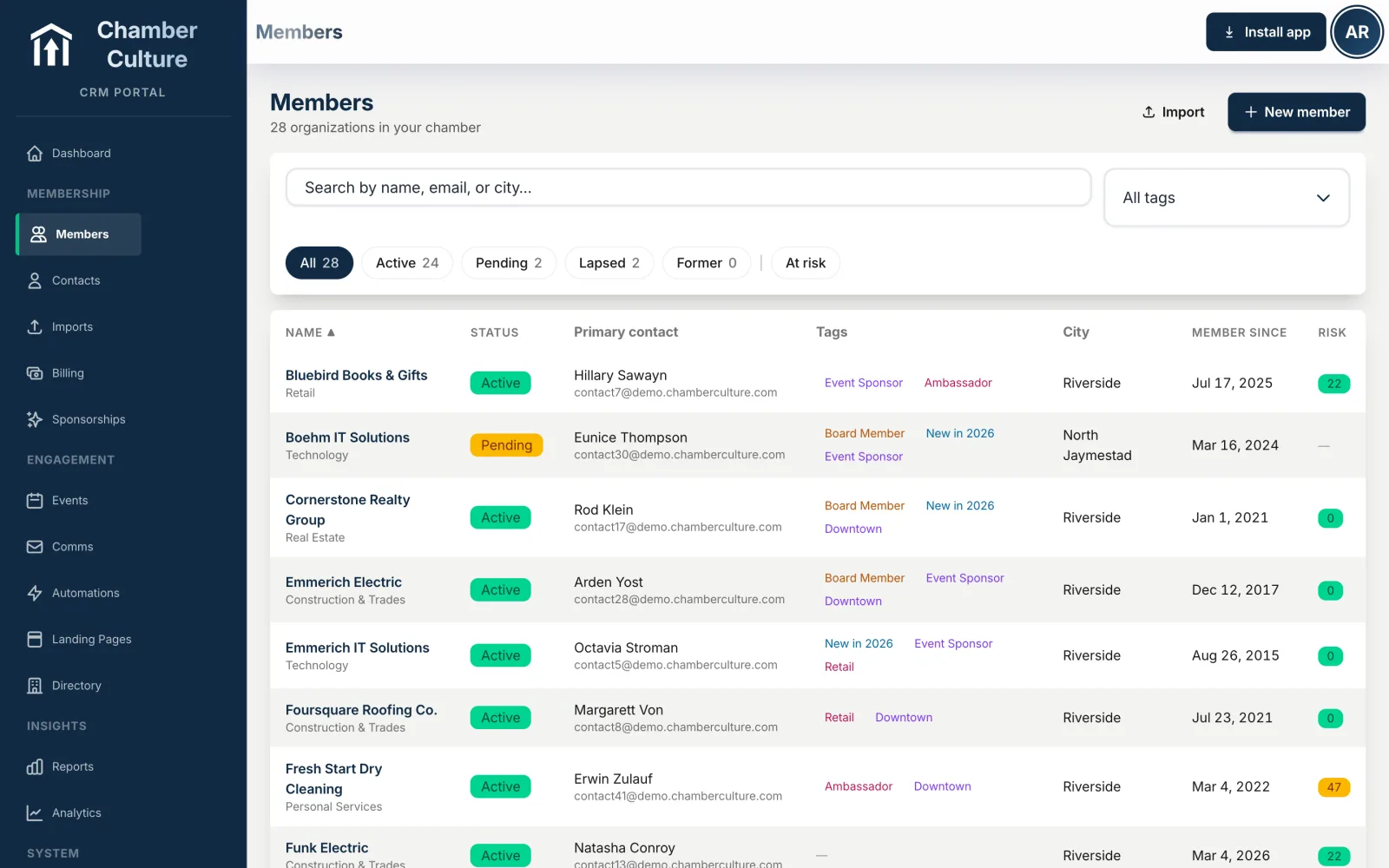
This is the exact system above, built into the platform rather than left for staff to maintain by hand:
All of it rolls up into reporting your board will actually read. If you're moving off a system that makes you maintain this by hand, see switching from GrowthZone, or try it on the live demo, no signup required. And once you're watching these signals, the next step is turning a drop signal into a saved renewal before the invoice ever goes out.
Identity tags describe who a member is and rarely change, such as industry, woman-owned, veteran-owned, or downtown. Behavior tags describe what a member does, such as attended 3+ events this quarter, sponsor, or committee member, and should be set automatically by the software, not maintained from memory. Pipeline tags, such as upgrade candidate or renewal risk, exist for one reason: to trigger a phone call. Mixing the three causes tag rot, where nobody trusts the tags because a human was supposed to keep them current by hand.
Four signals predict a member is ready to move up a tier: two or more years of tenure, dues always paid on time, showing up to two or more events a quarter, and having said yes to a sponsorship at least once. A member who hits three of the four is worth a coffee, not an email, because each signal is evidence they already value what the chamber does.
The early warning signs are no event attendance in six months, dues going late for the first time, no email opens, and the member's usual contact person leaving the business. Any one of these is worth a check-in call; catching a member before they lapse is worth more than any upsell, and it's far cheaper than replacing them.
At-risk scoring, an auto-filling task board, and tags that stay current on their own.
Get started → See the live demo →